February 15, 2025
Stump Grinding vs. Stump Removal: Which Is Right for You?
Understanding Your Options
When it's time to deal with a tree stump, you have two primary options: stump grinding and stump removal. While the terms are sometimes used interchangeably, they're actually two very different processes with different results, costs, and applications. Understanding the difference will help you make the right choice for your specific situation.
What Is Stump Grinding?
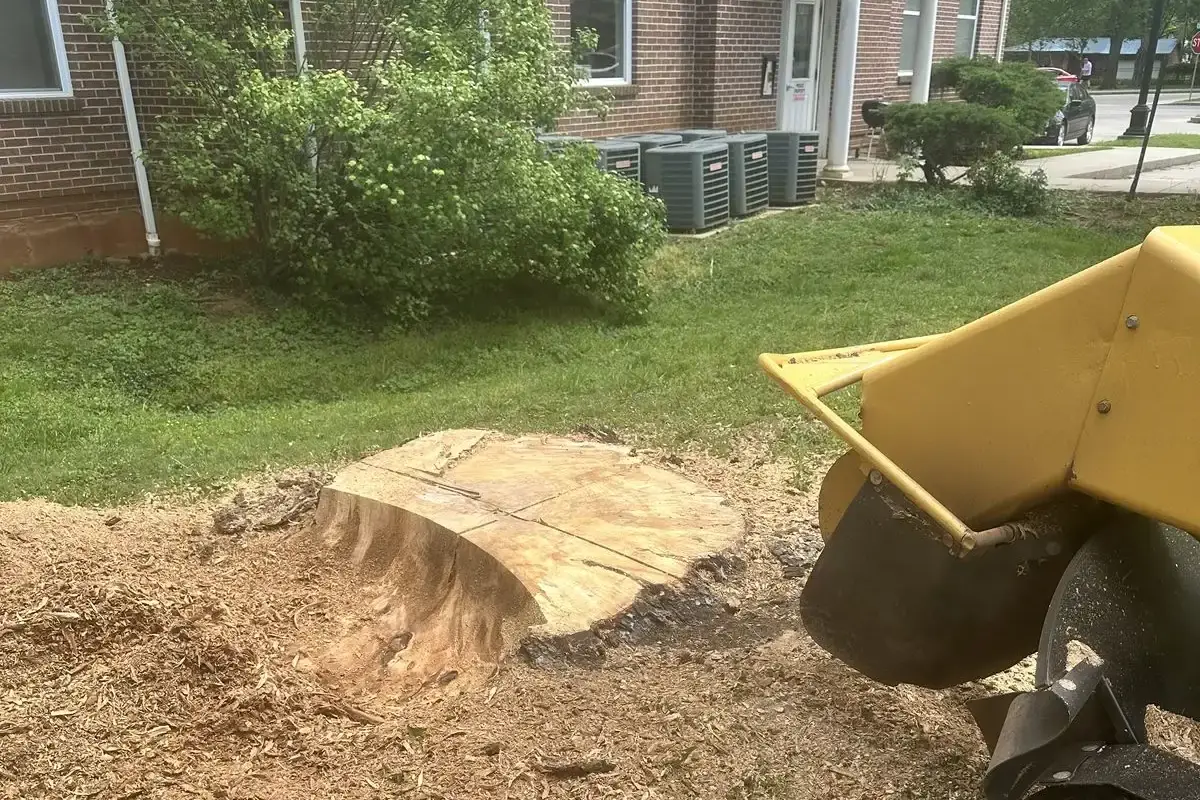
Stump grinding uses a specialized machine called a stump grinder to mechanically chip away the stump and its visible root flare. The grinder has a rotating cutting wheel with carbide-tipped teeth that shreds the wood into small chips. The stump is ground down to 6–12 inches below the surrounding ground level, and the resulting wood chips are used to fill the hole or can be hauled away. The underground root system is left in place to decompose naturally over the following years. This process is relatively quick, minimally invasive to your yard, and significantly more affordable than full removal.
What Is Stump Removal?
Stump removal (extraction) involves physically pulling the entire stump and its root ball out of the ground. This is a more intensive process that requires heavier equipment and creates a larger hole that must be backfilled with soil. The advantage is that the stump and its root system are completely eliminated, leaving a clean subsurface. This is important when you need to build on the site, install hardscaping, or ensure no root-related issues in the future.
Process Comparison
Stump grinding is straightforward: the grinder is positioned over the stump, and the cutting wheel is systematically moved across the stump face, grinding it into chips layer by layer until the stump is well below grade. Most stumps take 30–60 minutes. The process is relatively quiet, creates minimal vibration, and the only byproduct is wood chips. Stump removal is more involved. The area around the stump must be excavated to expose the roots, which are then cut. The stump and root ball are lifted out using mechanical force, leaving a hole that can be several feet deep and wide. The hole is then backfilled with clean soil and graded. This process takes longer, requires more equipment, and creates more disruption.
Cost Comparison
Stump grinding is typically 40–60% less expensive than full removal. Grinding costs are primarily based on the diameter of the stump, with most residential stumps in the St. Louis area ranging from $100 to $400 per stump. Volume discounts are available for multiple stumps. Full removal costs more due to the additional labor, equipment, and backfill material required. The larger the stump and root system, the greater the cost difference between the two methods.
When to Choose Stump Grinding
Stump grinding is the right choice for most residential situations. Choose grinding when you simply want the stump gone for aesthetic or safety reasons, when you plan to seed grass or plant a garden in the area, when you want the most affordable option, when you want minimal disruption to your yard, or when you want to keep the wood chips for mulch. The vast majority of our customers — probably 90% or more — choose grinding over removal.
When to Choose Stump Removal
Full removal makes sense in specific situations: when you're building a structure on the site (foundation, pool, patio), when you need to replant a large tree in the exact same location, when the root system is actively damaging foundations or infrastructure, or when complete subsurface clearance is required for construction. If you're not sure which option is right for you, we're happy to assess your situation and recommend the best approach.
The Bottom Line
For most homeowners in the St. Louis area, stump grinding is the faster, more affordable, and less disruptive option. It eliminates the visible stump, removes tripping hazards, and lets you reclaim your yard. Full removal is worth the additional cost when you have specific construction or planting needs that require a completely clear subsurface. K2 Stump Grinding offers both services and can help you determine the best approach for your property. Contact us for a free estimate.
Frequently Asked Questions
Can I plant a new tree where a stump was ground?
Yes, but we recommend planting the new tree slightly offset from the original location. The remaining root system will decompose over time, and planting directly in the ground-up area can be challenging due to the wood chip and root material.
How long do ground roots take to decompose?
Underground roots left after stump grinding typically decompose within 5-10 years, depending on the tree species, soil conditions, and moisture. The process is natural and doesn't cause any problems during that time.
Is stump grinding noisy?
Stump grinders produce noise similar to a large lawn mower or chainsaw. We always respect neighborhood noise ordinances and typically work during standard business hours.